AP US History: Hall of Fame

  • Home
  • Questions
  • John Rolfe
  • John Winthrop
  • Roger Williams
  • George Whitefield
  • Jonathan Edwards
  • Thomas Paine
  • Benjamin Franklin
  • Samuel Adams
  • Patrick Henry
  • George Washington
  • John Adams
  • Alexander Hamilton
  • Thomas Jefferson
  • Lewis and Clark
  • James Madison
  • John Marshall
  • Henry Clay
  • John C. Calhoun
  • Samuel Morse
  • Eli Whitney
  • Andrew Jackson
  • Horace Mann
  • William Lloyd Garrison
  • Frederick Douglass
  • Elizabeth Cady Stanton
  • Dorothea Dix
  • Harriet Tubman
  • James Polk
  • Harriet Beecher Stowe
  • Abraham Lincoln
  • Ulysses Grant
  • Andrew Carnegie
  • Walt Disney
  • Thomas Edison
  • Jane Addams
  • Booker T. Washington
  • WEB DuBois
  • Margaret Sanger
  • Theodore Roosevelt
  • Upton Sinclair
  • Woodrow Wilson
  • Franklin Roosevelt
  • Harry Truman
  • Dwight D. Eisenhower
  • Martin Luther King, Jr.
  • Malcolm X
  • John F. Kennedy
  • Rachel Carson
  • Lyndon B. Johnson


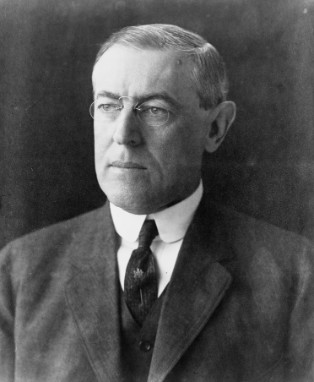
 Woodrow Wilson


In the Election of 1812, Woodrow Wilson had a platform of "New Freedom".  As a progressive, he wanted change. Upon winning the election and becoming the twenty eighth President of the United States, he urged Congress to pass the Federal Reserve Act of 1813, the Revenue Act of 1913, and the Clayton Anti-Trust Act of 1914. In the Election of 1816, Wilson ran again with the slogan, "he kept us out of the war". This eventually changed in April 1917 when he asked Congress to declare war and America would join on the side of Great Britian Nearing the end of World War I, Wilson issued his

Fourteen Points, in which he empasized his fourteenth point--the creation of the League of Nations. Unfortunately for Wilson, America did not sign the Treaty of Versailles nor did they join the League. He was given a Nobel Peace Prize for his strong efforts.
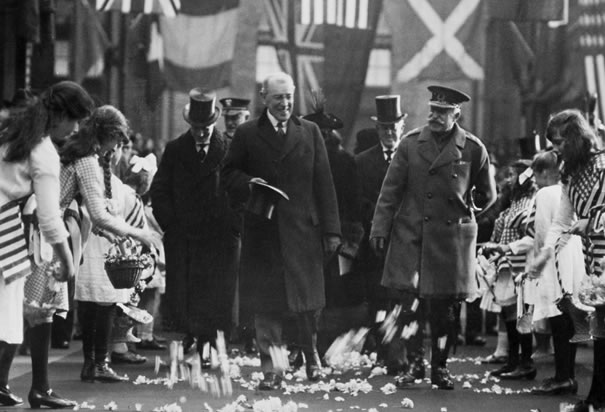
 

 Above: Woodrow Wilson after the Treaty of Versailles was signed.

Make a Free Website with Yola.