AP US History: Hall of Fame

  • Home
  • Questions
  • John Rolfe
  • John Winthrop
  • Roger Williams
  • George Whitefield
  • Jonathan Edwards
  • Thomas Paine
  • Benjamin Franklin
  • Samuel Adams
  • Patrick Henry
  • George Washington
  • John Adams
  • Alexander Hamilton
  • Thomas Jefferson
  • Lewis and Clark
  • James Madison
  • John Marshall
  • Henry Clay
  • John C. Calhoun
  • Samuel Morse
  • Eli Whitney
  • Andrew Jackson
  • Horace Mann
  • William Lloyd Garrison
  • Frederick Douglass
  • Elizabeth Cady Stanton
  • Dorothea Dix
  • Harriet Tubman
  • James Polk
  • Harriet Beecher Stowe
  • Abraham Lincoln
  • Ulysses Grant
  • Andrew Carnegie
  • Walt Disney
  • Thomas Edison
  • Jane Addams
  • Booker T. Washington
  • WEB DuBois
  • Margaret Sanger
  • Theodore Roosevelt
  • Upton Sinclair
  • Woodrow Wilson
  • Franklin Roosevelt
  • Harry Truman
  • Dwight D. Eisenhower
  • Martin Luther King, Jr.
  • Malcolm X
  • John F. Kennedy
  • Rachel Carson
  • Lyndon B. Johnson


Andrew Jackson


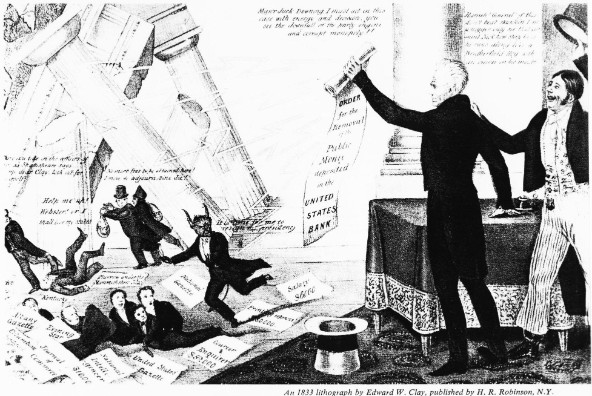
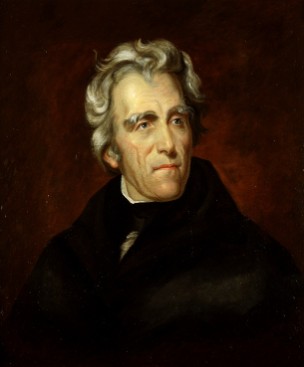
During the War of 1812, Andrew Jackson became a hero after defeating the British at the Battle of New Oreleans. After losing the Election of 1824, Jackson (nicknamed "Old Hickory") ran again in the Election of 1828 and defeated John Quincy Adams. During his presidency, two parties came out of the Republican Party. The Democratic-Republicans/Democrats supported Jackson while the National Republicans/Whigs opposed him. Such opposers included Henry Clay and Daniel Webster. Jackson is known for his hefty usage of the president's power to veto which led opposers to label him as "King Andrew I". The greatest party battle during his presidency concerned the re-charter of the Second Bank of the United States, which Jackson vetoed, crushing the bank.


 Above: A political cartoon showing Andrew Jackson destroying the Second Bank of the United States.

Make a Free Website with Yola.