Franklin D. Roosevelt
As the 32nd President of the United States, Franklin Delano Roosevelt led the nation through a time of depression and a war. He won his first presidential election in 1932, which was during the Great Depression. In his "First 100 Days", Roosevelt launched the New Deal which included programs to help America recover from the depression. These programs focused on the three R's: relief, recovery, and reform. The First New Deal focused on groups--big businesses, industry, and farming while the Second New Deal focused on relief programs for individuals and | 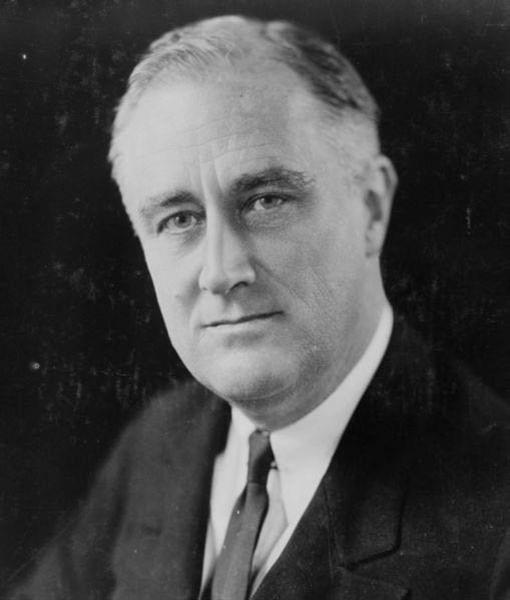 |
promoted labor unions. Some of the many New Deal programs included: the Federal Emergency Relief Administration, the Civilian Conservation Corps (CCC), Agricultural Adjustment Administration (AAA), and the Works Progress Administration (WPA). These programs were called Roosevelt's Alphabet Soup Agencies. Along with the agencies, Roosevelt was able to pass: the Emergency Banking Act, the Emergency Banking Relief Bill, the Glass-Steagall Act which created the Federal Deposit Insurance Corporation (FDIC), the National Industrial Recovery Act (NIRA), the Social Security Act, and the National Recovery Act (NRA). Through all his hard work, Roosevelt was able to help Americans, but his his programs were not enough to get America out of the depression. When World War II broke out, Americans were sure they would keep their neutrality. But, after the bombing of Pearl Harbor, America declared war. It was the actual war that took America out of the depression. But, Roosevelt is still known as one of the greatest U.S Presidents.
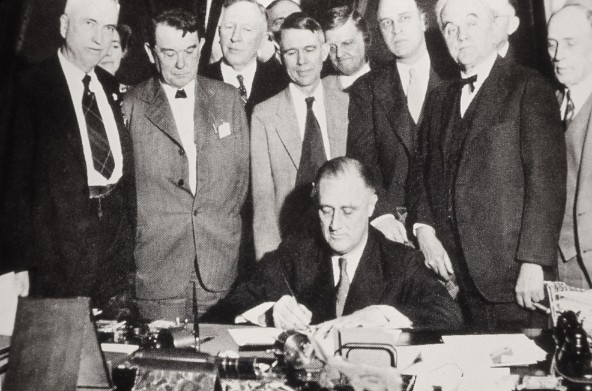
Above: Franklin D. Roosevelt signing papers.
