AP US History: Hall of Fame

  • Home
  • Questions
  • John Rolfe
  • John Winthrop
  • Roger Williams
  • George Whitefield
  • Jonathan Edwards
  • Thomas Paine
  • Benjamin Franklin
  • Samuel Adams
  • Patrick Henry
  • George Washington
  • John Adams
  • Alexander Hamilton
  • Thomas Jefferson
  • Lewis and Clark
  • James Madison
  • John Marshall
  • Henry Clay
  • John C. Calhoun
  • Samuel Morse
  • Eli Whitney
  • Andrew Jackson
  • Horace Mann
  • William Lloyd Garrison
  • Frederick Douglass
  • Elizabeth Cady Stanton
  • Dorothea Dix
  • Harriet Tubman
  • James Polk
  • Harriet Beecher Stowe
  • Abraham Lincoln
  • Ulysses Grant
  • Andrew Carnegie
  • Walt Disney
  • Thomas Edison
  • Jane Addams
  • Booker T. Washington
  • WEB DuBois
  • Margaret Sanger
  • Theodore Roosevelt
  • Upton Sinclair
  • Woodrow Wilson
  • Franklin Roosevelt
  • Harry Truman
  • Dwight D. Eisenhower
  • Martin Luther King, Jr.
  • Malcolm X
  • John F. Kennedy
  • Rachel Carson
  • Lyndon B. Johnson


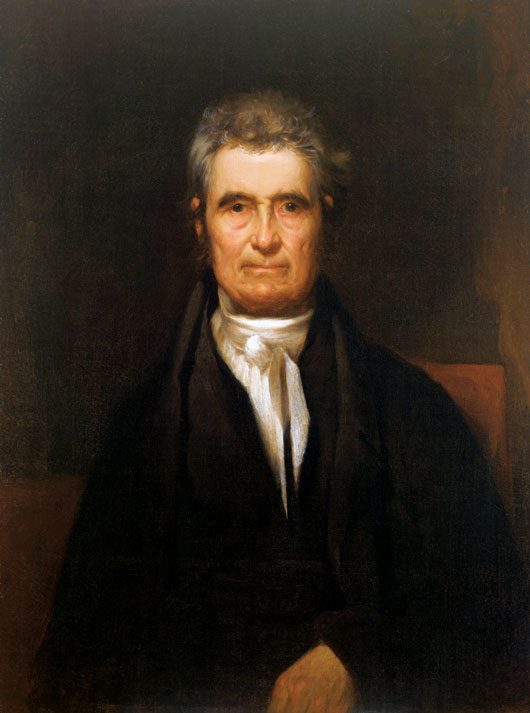
 John Marshall


In 1801, nearing the end of his presidency, John Adams appointed "midnight judges". One of the greatest decisions he made was to appoint John Marshall (a Federalist) as Chief Justice of the Supreme Court. During his many years as Chief Justice, Marshall made decisions that helped shape the Supreme Court and greatly brought up its stature. In the famous Supreme Court case of Marbury v. Madison, Marshall gave the Supreme Court the power of judicial review, which allowed them to take down laws they think violate the Constitution. Marshall served Chief Justice, continually making an impact in the Court until his death in 1835. Other landmark cases that occured during his role include: McColloch v. Maryland, and Gibbons v. Ogden.

Make a Free Website with Yola.