AP US History: Hall of Fame

  • Home
  • Questions
  • John Rolfe
  • John Winthrop
  • Roger Williams
  • George Whitefield
  • Jonathan Edwards
  • Thomas Paine
  • Benjamin Franklin
  • Samuel Adams
  • Patrick Henry
  • George Washington
  • John Adams
  • Alexander Hamilton
  • Thomas Jefferson
  • Lewis and Clark
  • James Madison
  • John Marshall
  • Henry Clay
  • John C. Calhoun
  • Samuel Morse
  • Eli Whitney
  • Andrew Jackson
  • Horace Mann
  • William Lloyd Garrison
  • Frederick Douglass
  • Elizabeth Cady Stanton
  • Dorothea Dix
  • Harriet Tubman
  • James Polk
  • Harriet Beecher Stowe
  • Abraham Lincoln
  • Ulysses Grant
  • Andrew Carnegie
  • Walt Disney
  • Thomas Edison
  • Jane Addams
  • Booker T. Washington
  • WEB DuBois
  • Margaret Sanger
  • Theodore Roosevelt
  • Upton Sinclair
  • Woodrow Wilson
  • Franklin Roosevelt
  • Harry Truman
  • Dwight D. Eisenhower
  • Martin Luther King, Jr.
  • Malcolm X
  • John F. Kennedy
  • Rachel Carson
  • Lyndon B. Johnson


Martin Luther King, Jr.


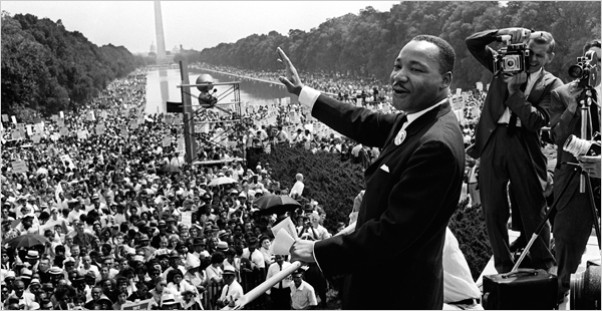
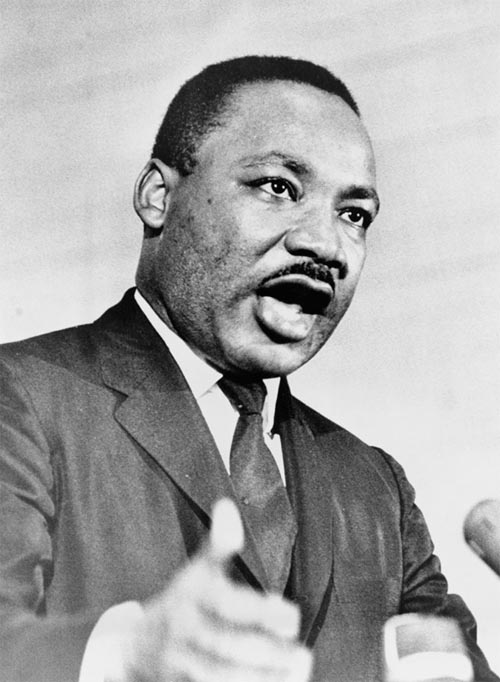
As an ordained Baptist minister, Martin Luther King, Jr. was a leading figure in the African-American Civil Rights Movement. In 1955, he led the Montgomery Bus Boycott after Rosa Parks was arrested. And in 1957, he was selected to lead the Southern Christian Leadership Conference becoming  its first president. In 1963, King delivered his "I Have A Dream" speech which established himself as one of the greatest orators in American history. His speech raised public awareness and pushed their fight even further. In 1964, he became the youngest person to recieve a Nobel Peace Prize. King was assassinated on April 4, 1968 in Memphis, Tennessee.


Above: Martin Luther King, Jr. on the day he deliverd his "I Have A Dream" speech. 

Make a Free Website with Yola.